Overall, demand for knee replacements is rising in the US. But in a certain patient population, the story looks very different.
September 25, 2026
We analyzed CMS data using our proprietary model and found a 12% nationwide increase in total knee arthroplasty (TKA) procedures, known colloquially as knee replacements, since 2023. We then used data from our open- and closed-claim sources to zoom in on patients diagnosed with both obesity and knee osteoarthritis, and found that TKA procedures have plateaued since 2023—while GLP-1 use has grown quickly.
The first half of the 2020s brought a surge in mainstream awareness of GLP-1s, which some have identified as having the potential to affect demand for total knee arthroplasty (TKA), known colloquially as knee replacement surgery.
The thinking is as follows: Obesity is tightly linked to knee osteoarthritis1, a condition treated (in severe cases) by TKA. If GLP-1s reduce the rate of obesity, there may be a downstream effect of fewer severe cases of knee osteoarthritis, and therefore reduced demand for TKA.
This blog post is not an attempt to establish causality between GLP-1 use and TKA demand.
That said, we were interested in observing the change in TKA volume in the US in recent years, a project made possible by our proprietary data model—derived from 100% of Centers for Medicare and Medicaid Services (CMS) data, as well as open- and closed-claim sources.
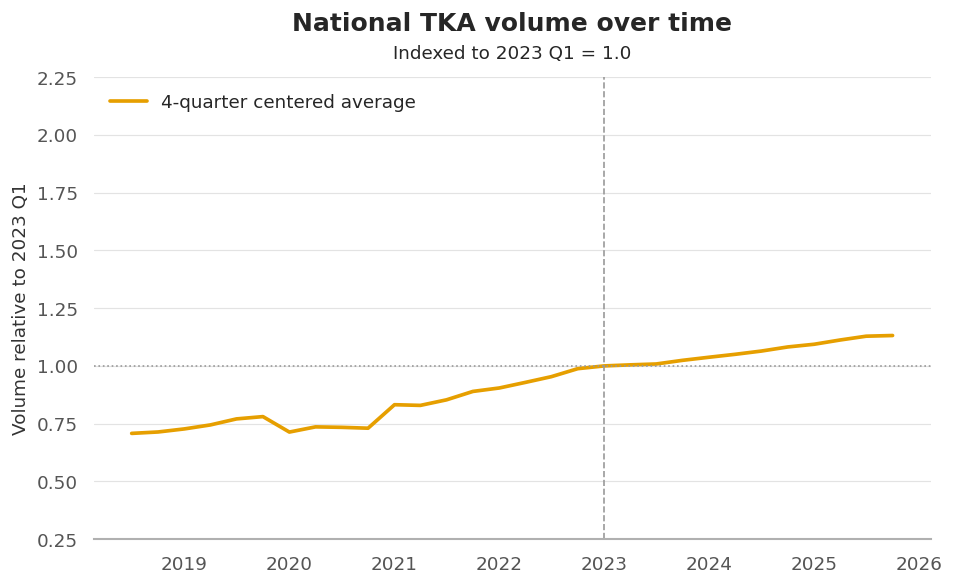
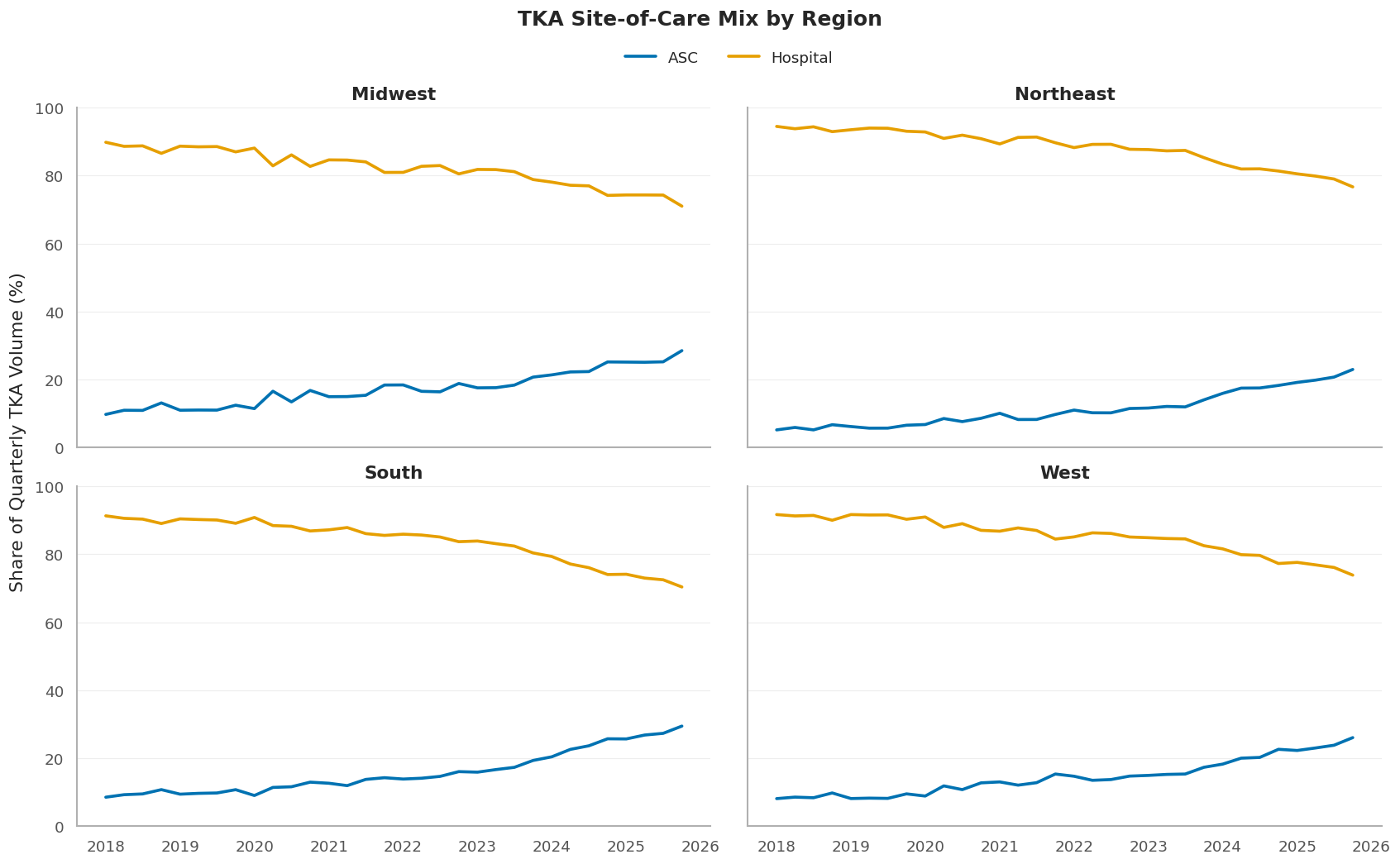
Using our model, we found that TKA volume has been consistently rising nationwide since 2018, including a 12% increase since 2023 (figure 1). Increasingly, these procedures are shifting away from hospitals to ambulatory surgery centers (ASCs) (figure 2). In both the Midwest and South, more than a quarter of TKA procedures now take place in ASCs (figure 2).
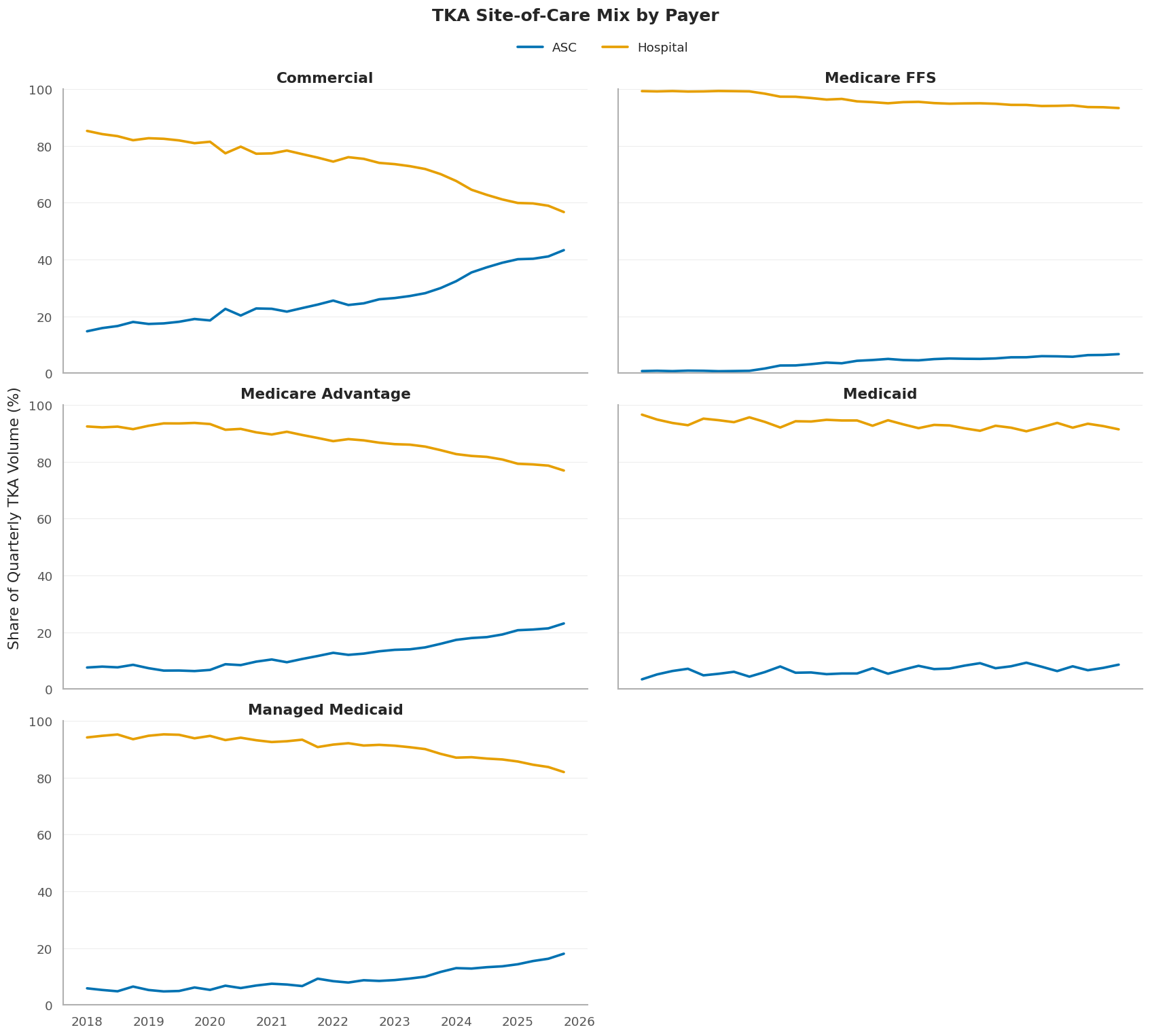
The shift to ASCs is most pronounced amongst procedures covered by commercial payers: In 2018, 16.3% of TKA procedures covered by commercial payers occurred in ASCs; by 2025, the share had climbed to 41.2% (figure 3). Procedures covered by Medicare Advantage are also contributing to the shift to ASCs (from 7.9% in 2018 to 21.4% in 2025) (figure 3).
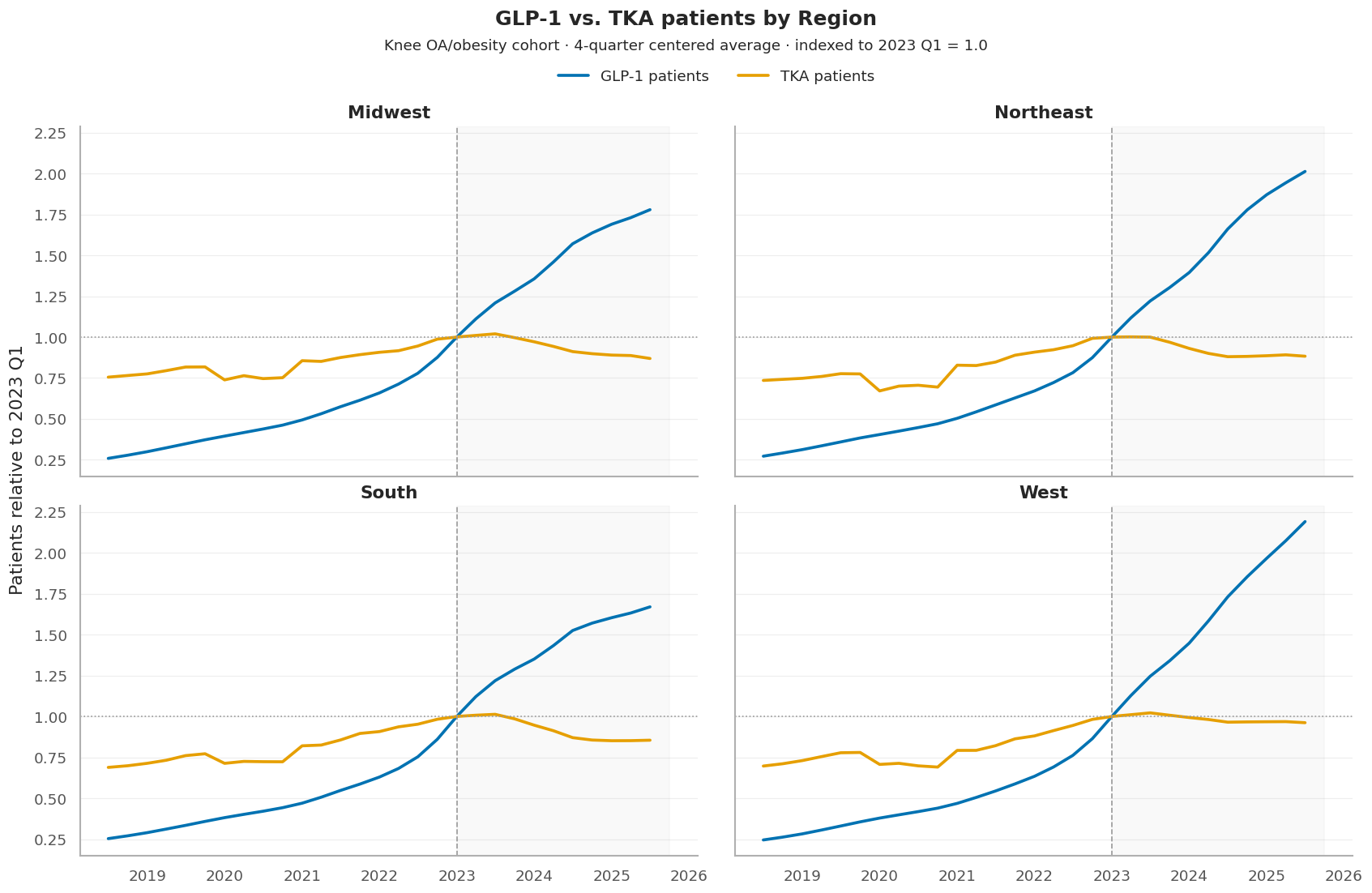
Using data from our open- and closed-claim sources, we zoomed in on a specific slice of the US population: the patients diagnosed with both obesity and knee osteoarthritis. Within this population, we found that GLP-1 use has risen quickly since 2023, whereas TKA procedure volume has plateaued (figure 4).
Though, again, this finding does not prove causality, we do believe it is a pattern worth watching, especially for suppliers of medical technologies involved in knee replacements. More generally, it’s a reminder for all medical technology suppliers to stay abreast of innovations targeting the upstream drivers of the conditions their technologies treat.
1 Zheng H, Chen C. Body mass index and risk of knee osteoarthritis: systematic review and meta-analysis of prospective studies. BMJ Open. 2015;5:e007568
2 Figure 4 Methods: Cohort = patients with ≥1 obesity (E66) and ≥1 knee-OA (M17) diagnosis in claims since 2018, pulled from claim-line-level diagnoses (primary + secondary), restricted to patients with ≥1 record in both the Rx and Mx claims sources. GLP-1 = unique cohort patients with ≥1 paid fill per quarter; TKA = unique cohort patients with a CPT 27447 per quarter. Both indexed to 2023-Q1 = 1.0 and shown as 4-quarter centered averages. 2026+ excluded due to claims lag.