Why MedTech AI needs more than just a powerful model
July 2, 2026
Discover the data foundation, context, governance, and engineering required to build AI that MedTech commercial teams can trust every day.
Today's large language models are remarkably capable. Any MedTech team with a few engineers can connect an LLM to their data and have it answer questions about accounts or procedures or providers. But while building a demo is relatively easy, the challenge is around ensuring that AI is consistently accurate and trustworthy in the field.
When a rep asks AI about a surgeon or a specific account opportunity, the answer can't simply sound plausible. It has to be reliable and grounded in the right data.
Getting there requires much more than most expect. And the gap between "it works in a demo" and "reps trust it before walking into a hospital every day of the weeks" is where most AI projects quietly fail.
The challenge of building trustworthy MedTech AI
MedTech commercial data (procedure volumes, payer mix, reimbursements, referral networks, etc.) is fragmented and messy by nature. Until its structured, connected, and continuously updated, AI can't generate meaningful insights from it.
The challenge is that AI doesn’t know when the underlying data is incomplete. It will answer anyway — confidently, fluently, and convincingly. It will connect the dots it has access to and produce something that sounds right. That's what makes poorly built MedTech AI so difficult to catch: the output looks like insight. A rep reads it, believes it, and walks into the room with the wrong picture.
And trust isn’t just about data quality. It’s also about governance. For example, sensitive data must remain scoped to the person asking the question, every time, even when it’s surfaced through AI. Get that wrong and you have built a compliance problem.
The stakes are also higher in MedTech AI compared to other enterprise software. A wrong procedure number in a quarterly review is embarrassing. A fabricated clinical claim in the operating room is dangerous. The questions reps ask are specific, situational, and consequential — setting a high bar for accurate information.
What's underneath an answer reps can trust
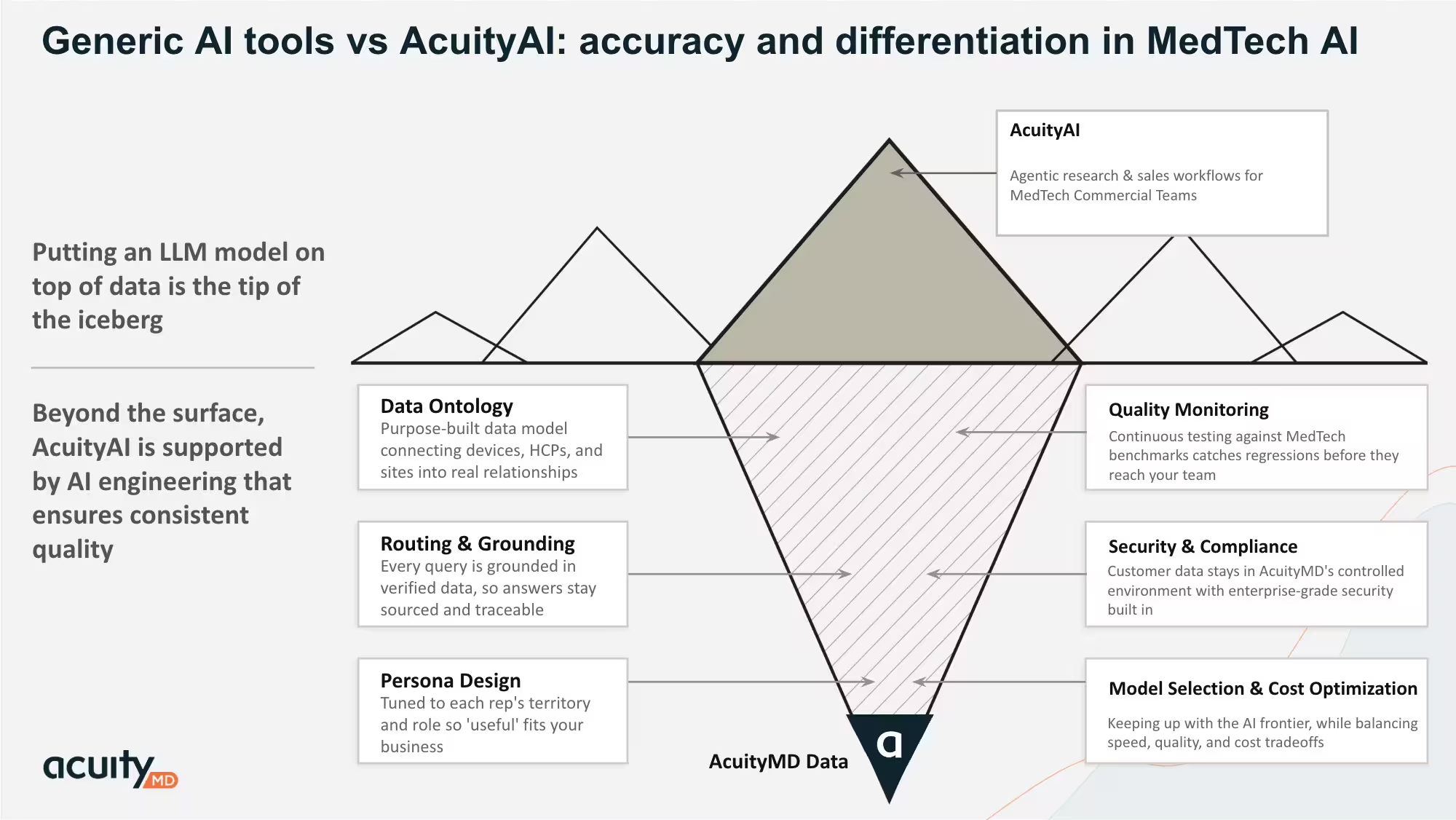
Below is what an in-house effort would have to build and maintain.
The right data foundation
Before AI can do anything, someone has to turn raw claims, procedures, providers, sites of care, affiliations, referrals, and payer data into something queryable, connected, and refreshed. This takes years of work, and is the majority of the iceberg. The model is the part you see but this is what makes the model worth using.
Context assembled automatically
A useful agent should know the MedTech rep's world before they can type a word: their role, the products their organization sells, the competitors they face, the procedure and diagnosis groups that matter to them, their targeting strategies, their account labels, the provider or facility on screen, and where they are standing. This type of context is what makes answers relevant instead of generic.
Reasoning across a real toolset, not a single query
A question such as "tell me about this account before my meeting" isn’t really one question. It requires understanding credentials, procedure volumes, referral patters, and prior sales activity — at once. A production agent works like an analyst, deciding what to pull and in what order, as it investigates across many specialized tools, reaching for only the ones the moment requires. Building those tools (and teaching the agent when to use each one) is an ongoing engineering challenge.
Encoded selling expertise
There is a difference between a generic email and the perfect intro to a net-new surgeon; between a data dump and a credible way to present procedure volumes. Capturing those best practices and teaching AI to apply them is design work that has nothing to do with the model. The value comes from embedding proven selling expertise into every recommendation and response.
Guardrails built for a regulated field
The agent should only surface verified information, never invent facts about providers or accounts. It avoids providing clinical advice or making commitments, and stays inside the user's role and territory. These constraints don’t limit the system but rather, make it trustworthy enough to use in real customer conversations.
Reliability in the field
MedTech reps won't be using AI from behind a desk. They'll use it between cases — on their phones — while preparing for meetings, often with limited time and inconsistent connectivity. If an agent is going to become part of a rep's daily workflow, it must be dependable. The agent needs to degrade gracefully when a data source is slow, retry quietly, and fall back across models during an outage, so it bends instead of breaks.
When it comes to AI, the visible part is the answer. The invisible part is everything required to make that answer trustworthy. In MedTech, that’s what separates a demo from a tool reps will rely on every day.
For years, AcuityMD has invested in exactly that. Learn more about AcuityAI.